No products in the basket.



Is Composite Decking Slippery When Wet?
Published · By Tough Decking Composite DeckingIs composite decking slippery when wet? No, not by nature, and it grips better than old timber decking does. The thing that makes any deck slippery is a build-up of algae, moss or green film on the surface, not the board itself. Keep it clean, and use the grooved side of our reversible boards in shaded or wet spots, and you will have good footing all year. The main place to take extra care is steps, where a grippy surface or a step nosing makes all the difference.
It is a fair question, and one worth asking before you spend money, because a deck you cannot walk on safely in the rain is no use to anyone. So is composite decking slippery when wet? The short answer is no, not if you choose and look after it sensibly. Here is the honest version, including where the risk actually comes from and how to stay ahead of it.
Is composite decking slippery when wet?
On its own, no. A clean composite board gives decent grip wet or dry, and it holds up far better than smooth, weathered timber, which turns treacherous the moment it greens over. Our boards are made with a textured surface rather than a smooth one, which is what gives your feet something to key into. Where any deck gets slippery, composite or timber, is when a film of algae or moss is allowed to build up on top. That film is the slippery bit, not the board, and it is completely preventable.
Why decks get slippery in the first place
Algae, moss and general green film love damp, shaded, still spots, under trees, along a north-facing wall, anywhere that stays wet and does not see much sun. Leave leaves and debris sitting on the boards and you give it something to feed on. It is the same reason paving and timber go slippery in the same conditions. The board underneath is fine, it is the layer of organic muck on the surface doing the sliding.
The grooved side gives extra grip
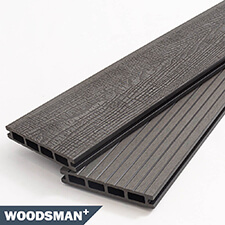
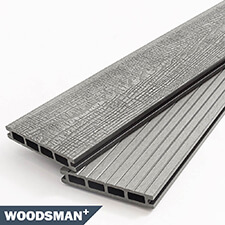
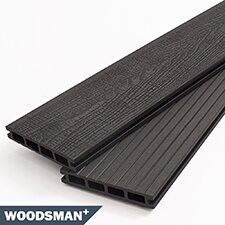
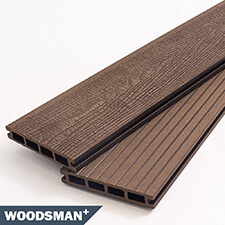
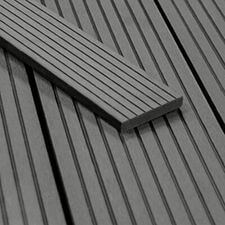
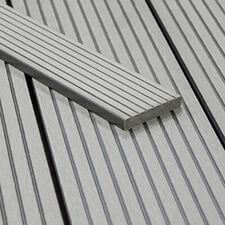
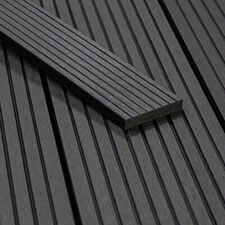
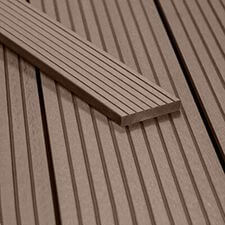
Our Woodsman boards are reversible, with a woodgrain face on one side and a grooved face on the other, so you get to choose. For most decks the woodgrain side is fine and looks great. But if part of your deck sits in permanent shade, or you just want maximum grip underfoot, lay those boards grooved side up. The grooves channel water away and give a bit more bite when it is wet. It is a free upgrade that comes with the board.
Keeping it non-slip
Grip comes down to keeping the surface clean, which is easy with composite. Sweep leaves off before they sit and rot, and give the deck a wash a couple of times a year with warm soapy water and a soft brush to shift any green film before it takes hold. Make sure water drains off rather than pooling, which is why a deck should be laid with a slight fall. Our cleaning and maintenance guide covers it, and a clean deck is a grippy deck.
Take extra care on steps
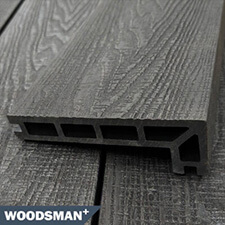
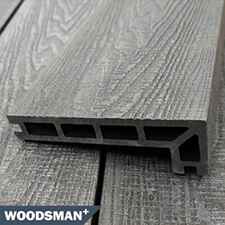
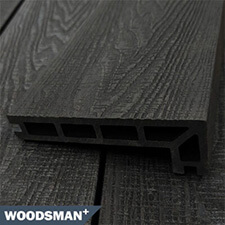
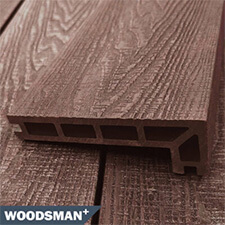
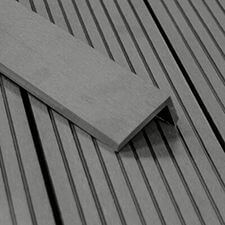
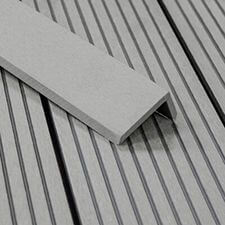
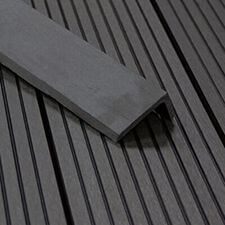
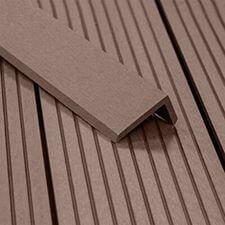
Steps are where a slip actually hurts, so they deserve a bit more thought. Use the grooved side of the board on step treads, or finish them with a composite step nosing, which gives a clean edge and a defined grip line right where your foot lands. If you have young kids or older visitors, that small detail is well worth doing.
Is composite decking slippery compared to timber?
If grip in the wet is your worry, composite is the safer bet. Timber starts smooth and gets slicker as it weathers and greens, and it needs regular treatment to stay decent. Composite keeps its textured surface, does not rot or splinter, and only asks for the odd wash to stay grippy. For a deck that sees rain, shade and real family use, it is the more sure-footed choice.
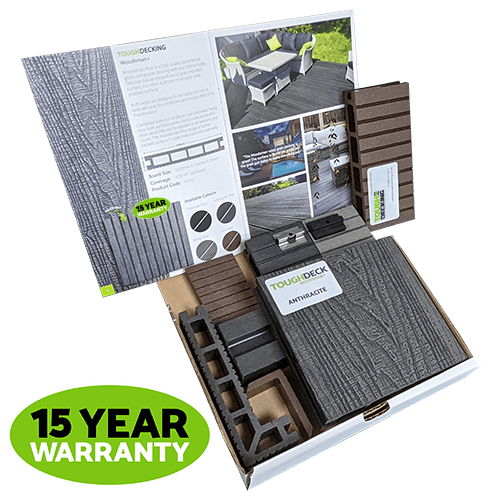
The best way to judge it is to feel the surface yourself. Order a free sample pack, have a look at both faces of the board, and see the full range on our composite decking boards page. Any questions on a particular deck, give us a call.