No products in the basket.



How to Clean Composite Decking (Without Damaging It)
Published · By Tough Decking Composite DeckingTo clean composite decking, all you need is warm water, a splash of washing-up liquid and a soft-bristled brush. Sweep the deck first, scrub along the grain in sections, then rinse it off with a hose so no soap is left behind. Do that a couple of times a year, wipe up spills when they happen, and keep leaves out of the gaps, and the boards will stay looking good. The things to avoid are wire brushes, harsh chemicals and holding a pressure washer close to the surface, because those are what actually cause damage.
One of the best things about composite is how little looking after it needs. There is no oiling, no staining and no yearly treatment, just the odd wash to keep it fresh. Here is how to clean composite decking properly, what to reach for, and the few things that can mark or damage a board if you are not careful.
How to clean composite decking: the basics
Start by clearing the deck and giving it a sweep with a soft brush to get the loose dirt and leaves off, paying attention to the gaps between the boards where debris collects. Then mix warm water with a little washing-up liquid and work across the deck with a soft-bristled brush, going along the grooves rather than across them. Do it in sections so nothing dries before you rinse. Finish by hosing the whole thing down until the water runs clear, because dried-on soap can leave a film and make the surface slippery. That is genuinely all you need to clean composite decking most of the time.
Dealing with stains
Spills are easier to shift the sooner you get to them. For grease or oil, a bit of washing-up liquid in warm water and a soft brush usually lifts it, and there are dedicated composite deck cleaners if a mark is being stubborn. Food and drink spills come up with the same soapy water. Rust marks from metal furniture feet or a barbecue can be scrubbed off with soapy water and a medium brush. If a stain has been left a while, expect to go over it a couple of times rather than scrubbing hard in one go.
Mould, algae and green film
Composite will not rot, but in a damp, shady spot it can still get a green film or surface mould, the same as any garden surface. It is not the board breaking down, it is organic muck sitting on top, usually where leaves have been left to pile up. Warm soapy water and a soft brush clears most of it, and a dedicated composite cleaner deals with the rest. The best prevention is keeping the gaps clear so water drains and air moves, especially under trees.
Scratches and scuffs
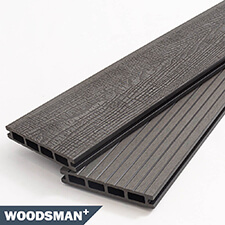
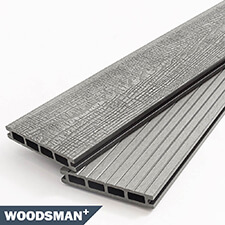
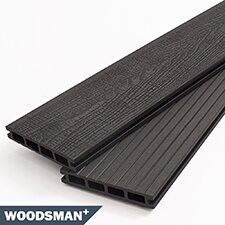
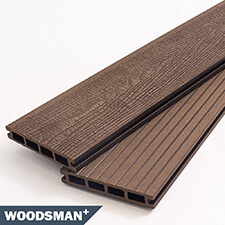
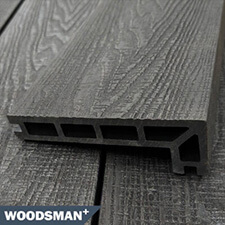
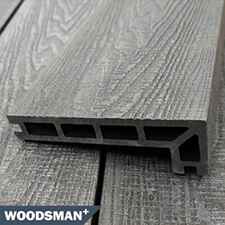
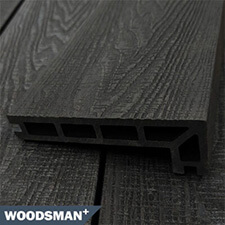
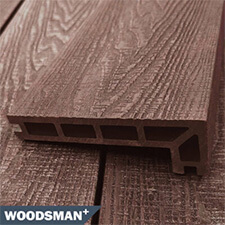
Here is one a lot of people do not realise. Our uncapped Woodsman boards can be lightly sanded, so minor scratches and scuffs, from pet claws or dragged furniture, can be sanded out. Work gently and always along the grain. The sanded patch will look a little lighter at first, then weather and blend back in with the rest of the deck after a few weeks of sun. That makes the Woodsman range a genuinely good choice if you have dogs. The one exception is the capped Elite range, which you should not sand, because the polymer shell on top is what does the protecting and sanding would cut through it.
What to avoid
This is the important bit, because a few habits do more harm than good. Skip the bleach and harsh solvents. And go easy with a pressure washer, our advice is that a hose does the job and is the safe choice. If you do use a pressure washer, keep it on a low setting with a fan tip, hold it well back from the boards and work along the grain, never blast it close up. Our cleaning and maintenance guide has the full detail.
A few habits that keep it clean
A little routine saves the big scrub. Sweep leaves off before they sit and trap moisture, wipe up spills when they land, and put felt pads under furniture feet so they do not drag and mark the boards. In winter, clear snow with a plastic shovel rather than a metal one, and avoid throwing rock salt around on the surface. None of it is hard work, which is rather the point of composite in the first place.
Capped boards are even easier
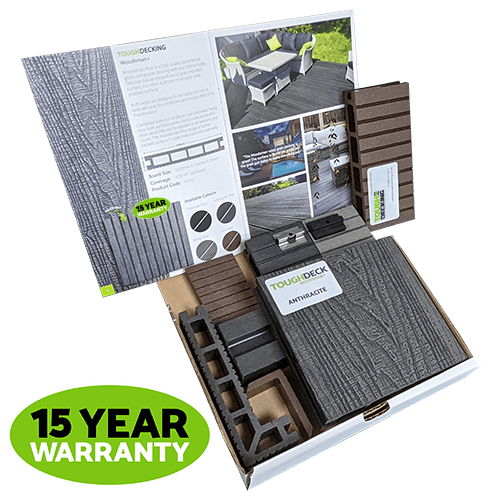
If you are still choosing boards, it is worth knowing the capped Elite range has a protective shell that resists stains and marks better than an uncapped board, so it takes even less to keep clean. Either way you are miles ahead of timber, which needs treating every year. You can see the full range and order a free sample pack on our composite decking boards page.