No products in the basket.



Composite vs Timber Decking: Which Is Cheaper Over 10 Years?
Published · By Tough Decking Composite DeckingOn composite vs timber decking, timber wins on the day you buy it and composite wins over the ten years that follow. A softwood timber deck is cheaper to buy, but it needs cleaning, sanding and re-treating every year, and boards often need replacing before a decade is out. Composite costs more up front and then costs almost nothing, no oiling, no staining, just an occasional wash, and it is guaranteed for 15 years. Add up the treatment, the time and the replacements, and composite usually lands level or cheaper over ten years, and well ahead after that.
It is the question everyone weighs up, and the honest answer depends on how far ahead you look. Timber is the cheaper board to buy, no argument. But decking is not a one-off cost, it is something you live with and look after for years. Here is how composite vs timber decking really compares once you count the whole decade, not just the first bill.
The upfront cost
There is no getting around it, softwood timber is the cheapest way to build a deck on day one, and it is why so many people start there. Hardwood costs a lot more and gets you closer to composite money. Composite sits above softwood on the initial spend, because you are paying for a board that is built to last and never needs treating. If your only measure is the cost of the boards on the pallet, timber looks like the winner. The picture changes the moment the deck is down and the weather gets to work.
The cost that keeps coming: timber maintenance
A timber deck is a job that comes back every year. To stop it greying, splitting and rotting, it needs a wash, sometimes a sand, and a fresh coat of stain or oil, usually once a year and at least every couple of years. That is the cost of the treatment plus a day of your time, every single year. Miss a few years and boards start to cup, split and rot, and then you are buying replacements and refixing them. Over ten years that adds up to a stack of tins, a lot of weekends, and almost certainly some new boards.
The cost that does not: composite
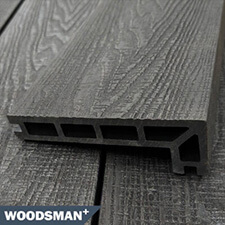
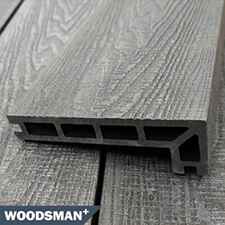
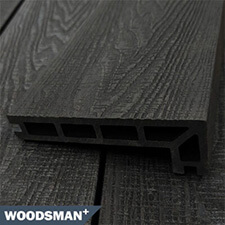
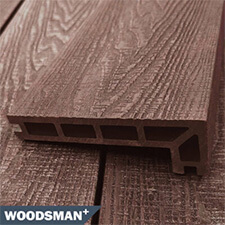
Composite does not need any of that. It will not rot, split or splinter, and it does not take stain or oil, so the yearly treatment job simply does not exist. All it asks is a wash a couple of times a year, which you would do to timber anyway. Our boards are hollow by design, capped or uncapped depending on the range, and carry a 15-year guarantee, so across a decade there is no treatment bill and, in the normal run of things, no replacement bill either.
Adding it up over ten years
Put composite vs timber decking side by side across ten years and the gap on day one starts to close fast:
| Over 10 years | Softwood timber | Composite |
|---|---|---|
| Cost to buy | Lowest | Higher |
| Annual treatment (stain or oil) | Every year | None |
| Sanding and repairs | Now and then | None |
| Replacement boards | Likely | None under guarantee |
| Cleaning | Wash | Wash |
| Guarantee | Rarely any | 15 years |
| Condition after 10 years | Faded, near end of life | Still going |
By the end of ten years, the timber deck has cost its purchase price plus a decade of treatment, time and the odd new board, and it is coming to the end of its life. The composite deck has cost more up front and almost nothing since, and it has years left in it. That is why composite so often works out level or cheaper over the period, and clearly cheaper once you look beyond it.
Composite vs timber decking: so which is cheaper?
If you are only staying a year or two, timber is cheaper and that is a fair choice. If the deck is staying put and you would rather not spend a weekend every spring with a tin of stain, composite is the better value over any sensible length of time, and you get those weekends back. For the full breakdown of what a composite deck costs to buy, our composite decking cost guide has the numbers, and our guide to how long composite decking lasts covers the lifespan side.
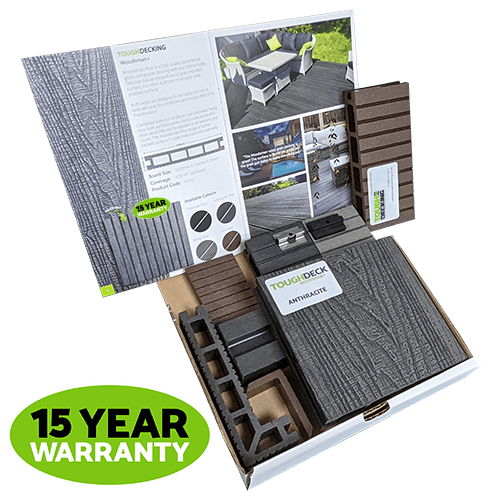
The best way to judge it is to see and feel the boards for yourself. Order a free sample pack, or browse the full range on our composite decking boards page, and weigh up the ten-year picture rather than just the first bill.