No products in the basket.




Composite Decking Expansion Gaps: How Much to Leave
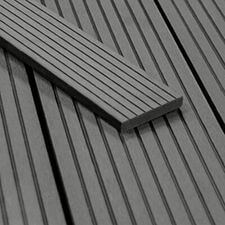
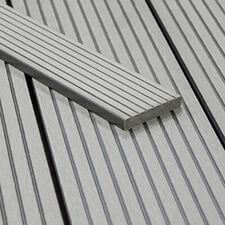
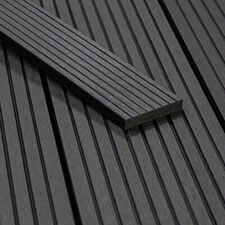
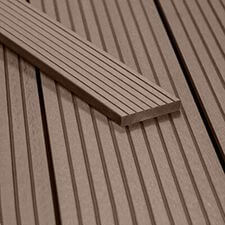
Published · By Tough Decking Composite DeckingWith composite decking expansion gaps, the fixing clips do most of the work for you. They set an even gap along the sides of the boards automatically, so the gaps you actually need to think about are the ends. Leave around 5mm where two board ends meet and where the deck runs up to a wall, a post or any fixed edge. Leave a touch more if you are fitting in cold weather, because the boards will expand as they warm up, and a touch less in the height of summer. Our boards are hollow by design, which keeps that movement small, but the gaps still matter.
Composite expands and contracts a little as the temperature changes, along the length of the board more than across it. Leave the right gaps and you will never notice it. Get them wrong and you can end up with boards pushing together or pulling apart. Here is where composite decking expansion gaps go, how big they should be, and why the weather on fitting day matters.
Why composite decking needs expansion gaps
Like any material, composite moves with heat and cold. A board fitted on a cold day will be at its shortest, and it will grow slightly as the sun gets to it. A board fitted in a heatwave is already near its longest. If there is nowhere for that movement to go, the boards push against each other or against a wall, and that is when you get lifting, bowing or tight, closed joints. The gaps give the boards room to breathe. Because our boards are hollow rather than solid, they move less than a lot of boards on the market, but you still build the gaps in.
The gaps along the sides
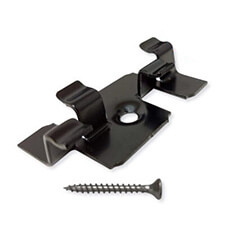
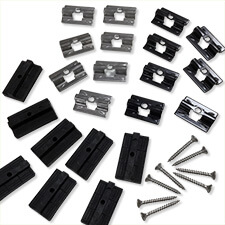
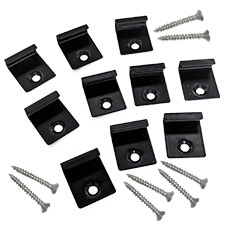
You do not need to measure these. The hidden fixing clips that hold the boards down sit in the groove on the side of each board and set a consistent gap as you go, which is part of what the clips are for. Fit the clips as they are meant to be fitted, at least eight per board and one at every joist, and the side gaps take care of themselves and stay even right across the deck.
Composite decking expansion gaps at the ends
These are the ones you set yourself, and they are the ones that matter most. Where two boards meet end to end over a doubled joist, leave a gap of around 5mm between them. Do the same wherever the deck meets something solid, a wall, a post, a step or a fixed planter. That gap is what gives the board somewhere to expand into. Leave it at every end, not just some, and keep it consistent so the finished deck looks tidy.
Let the weather set the exact gap
This is the bit people miss. The right end gap depends on how warm it is when you fit. On a cold day the boards are contracted, so leave a little more than 5mm, because they will expand as they warm. In hot weather the boards are already expanded, so you can leave a little less. If you fit in the middle of a cold snap and butt the boards up tight, they will have nowhere to go by July. When in doubt, err on the generous side at the ends. Our fitting instructions have the detail.
The rest of the frame helps too
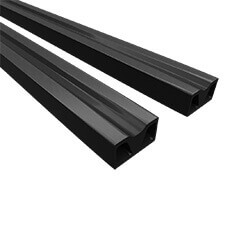
Gaps work alongside the rest of a good build. Double the joist under every board joint so both ends are supported and fixed with two clips, stagger the joints across the deck rather than lining them up, and lay the boards with a slight fall along their length so water runs off. Never lay composite flat onto a solid surface with no ventilation underneath. Get the composite decking expansion gaps right along with all of that and the deck will sit still and drain properly for years. Our installation guide walks through it, and if a deck is already moving, our guide on why composite decking moves covers the fixes.
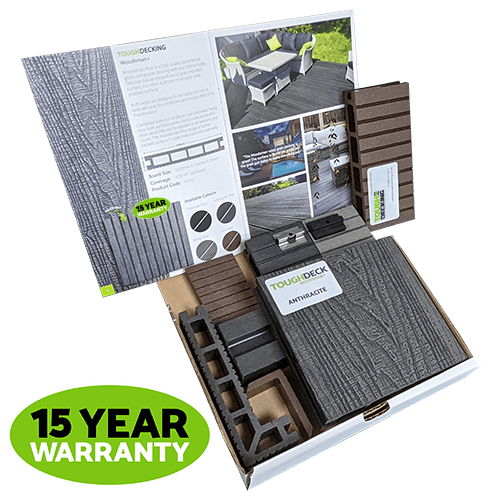
Planning a deck and want to get it right first time? Order a free sample pack to get a feel for the boards, or see the full range on our composite decking boards page, and give us a call if you want to talk a particular job through.