No products in the basket.




Why Composite Decking Moves on the Joists (and How to Fix It)
Published · By Tough Decking Composite DeckingComposite decking movement almost always comes down to one of four things: the joists are too far apart, the board ends are not doubled up and screwed down, the fixing clips are loose or the wrong type, or no expansion gap was left for the boards to move as they warm and cool. Work out which one you are dealing with and most are a straightforward fix, often without lifting the whole deck. Here is how to tell them apart.
A composite deck should feel like a solid floor. If yours bounces, shifts underfoot or has gaps that seem to come and go, something in the build is not right. The good news is that composite decking movement is not something the board does on its own. It happens because of how the frame or the fixings were done, so once you know what you are looking at you can usually put it right. Here are the common causes, how to spot each one, and what to do about it.
The deck bounces or feels springy
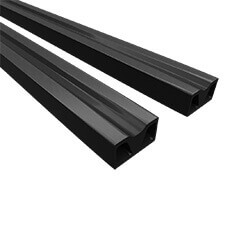
This is nearly always the frame, not the boards. If you feel give when you walk across it, the joists are too far apart. Composite boards need support at 300mm centres to stay firm, and anything wider leaves them room to flex between the joists. The fix is to stiffen the frame. Fitting noggins, which are short lengths of timber between the joists, or sistering an extra joist alongside the existing ones, cuts the span and takes the bounce out. Our joist spacing guide covers the right centres for each range.
The boards shift sideways or click when you step on them
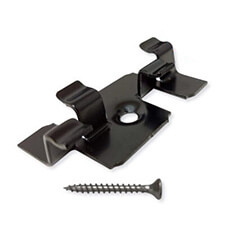
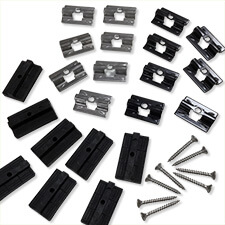
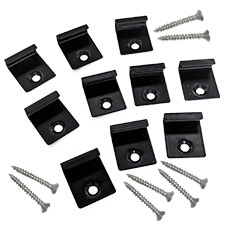
That is the fixing clips. Composite boards are held down with hidden clips that sit in the groove on the side of the board and screw into the joist. If a clip is loose, missing, or was never driven fully home, the board can slide a little and you get a click or a knock underfoot. Lift the affected board, check every clip is seated properly and the screw is tight, and replace any that have worked loose. Using the correct clips for the board matters too, which is why our kits come with the right ones included.
Gaps open and close through the year
This one catches a lot of people out, and it is not a fault. Composite boards expand a little when they are warm and contract when they are cold, along their length. If the gaps between board ends look bigger in winter and tighter in summer, that is the board doing exactly what it should. Problems only start if no expansion gap was left at all, because then the boards have nowhere to go and can push against each other or against a wall. The fix is to make sure there is a proper gap at every board end and wherever the deck meets a fixed edge like a wall or a post. Our fitting instructions give the gap to leave.
The whole deck rocks or feels loose
If the deck moves as a unit rather than board by board, the problem is under the frame. The subframe has not been fixed down, is not sitting level, or is standing on ground that has shifted. A deck frame needs to be secured to a solid base and packed level so it cannot rock. If it is sitting on soil or slabs that have moved, that base needs sorting before anything on top will feel right.
Boards lifting at the ends
Every board end has to land on a joist and be fixed down. Where two boards meet, you run two joists side by side so both ends are supported, and each end gets a clip. If an end was left floating between joists, or the joint was not doubled up, that end can lift or bounce. The fix is to add support under the unsupported end, which usually means an extra joist or a noggin in the right place, then clip the end down.
How to prevent composite decking movement
Nearly all composite decking movement traces back to the frame. Get the joists at the right centres, double them up under every board joint, fix the frame down solid and level, leave the correct expansion gaps, and use the right clips driven fully home, and the deck will stay put. Our composite decking installation guide runs through the whole process, and if you are working over an existing frame it is worth checking it against those points before you lay a single board.
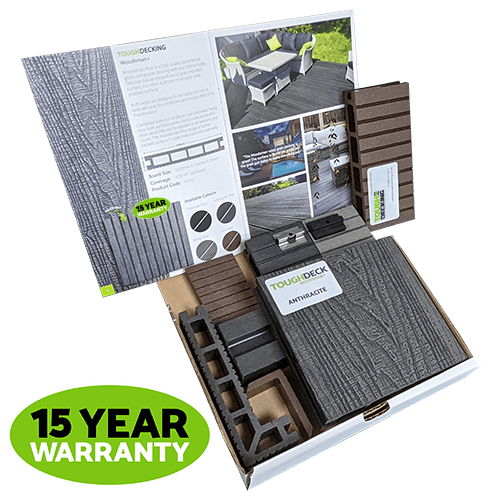
If your deck is already down and moving and you are not sure which of these you are dealing with, give us a call and talk it through, we deal with these questions all the time. If you are planning a new deck, a free sample pack lets you get a feel for the boards first, and you can see the full range on our composite decking boards page.